Stockwell High Street bulky rubbish collection options
Posted on 13/10/2026
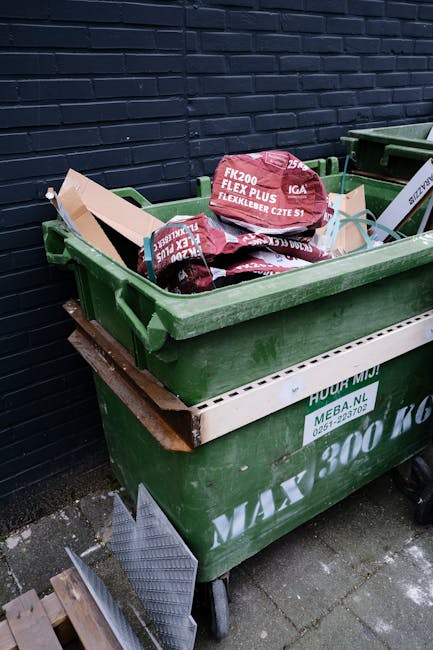
Stockwell High Street bulky rubbish collection options: a practical local guide
If you are dealing with a sofa that will not fit through the door, a broken wardrobe leaning awkwardly in the hallway, or the sort of mixed household clutter that seems to breed overnight, the search for Stockwell High Street bulky rubbish collection options can feel oddly urgent. You want it gone, but you also want the job done properly, safely, and without turning a simple clear-out into a small drama on the pavement.
That is exactly what this guide is for. We will look at the main ways bulky items are collected in and around Stockwell High Street, how each option tends to work, where the practical trade-offs sit, and what to check before you book. Whether you are clearing one item or tackling a full room, the right approach usually comes down to speed, cost, access, and how much sorting you want to do yourself. Simple enough, in theory. In real life? Not always.
To help you compare properly, this article covers local collection methods, compliance basics, mistakes people make, and a few expert pointers that can save time and stress. If you are weighing up furniture removal, household waste clearance, or a mixed bulky load, you will find the essentials here.
Why Stockwell High Street bulky rubbish collection options Matters
Bulky waste is not just "stuff in the way". On a busy street like Stockwell High Street, large items can quickly create access issues, clutter shared entrances, attract complaints from neighbours, and become a safety nuisance if they are left out too long. A mattress propped by the kerb on a damp evening does not stay tidy for long. It gets heavy, soggy, awkward, and a bit grim, frankly.
Choosing the right bulky rubbish collection route matters because different loads need different handling. A single chest of drawers is a different job from a full flat clearance. An old fridge is different again because it may need specialist handling. And if you are in a managed block, the building rules can matter just as much as the waste itself. A well-planned collection saves repeated lifting, avoids missed pickups, and helps you avoid that annoying second round of sorting after the van has already gone.
There is also a financial side. People often assume that the cheapest option is always best, but that can be misleading if it means hiring a vehicle twice, paying for parking issues, or failing to remove everything in one go. Better planning usually means better value, even if the first quote looks a touch higher.
In practice, the best Stockwell High Street bulky rubbish collection options are the ones that match the volume, access, urgency, and type of waste you actually have. Not the idea of what you have. The actual heap. That distinction matters more than people think.
How Stockwell High Street bulky rubbish collection options Works
Most bulky rubbish collection services follow a similar flow. You explain what you need removed, describe where it is, and share any access complications. Then the provider estimates the job based on the items, loading time, and disposal route. On the day, the team arrives, lifts and loads the waste, and takes it away for sorting, reuse, recycling, or disposal depending on the materials.
The practical differences lie in how much you prepare beforehand and how much is handled for you. Some options are designed for one or two large items. Others are better for mixed loads from a house, loft, office, or storage unit. If you need furniture removal in Stockwell, for example, the team may be able to dismantle items, carry them from upstairs, and separate reusable pieces from general waste. For heavier mixed loads, a waste clearance approach may suit better because it can include more varied items in one visit.
Timing also varies. Some collections can be arranged quickly, which helps if you are on a tight move-out deadline or trying to clear space before decorators arrive. Others may need a bit more notice. And if there is restricted access, narrow stairs, or limited parking, you will usually get a smoother result if you mention that up front. In our experience, the jobs that go best are the ones where the awkward bits are discussed early, not discovered at the front door.
Here is the short version: the process works best when you give a clear list, a realistic photo if asked, and honest details about access. That is how you get an accurate plan rather than an optimistic guess.
Key Benefits and Practical Advantages
A good bulky waste collection service does more than remove objects. It reduces friction. You stop tripping over a wardrobe door in the hallway. You get the spare room back. You free up the boot of the car. And, perhaps most importantly, you avoid the slow creep of clutter that makes a home or business feel more stressed than it needs to.
- Convenience: Large items are removed without you hiring a van, loading heavy furniture, or making repeated trips.
- Time savings: What might take you a whole afternoon can often be handled in a single visit.
- Reduced manual lifting: This is a big one for flats, stairwells, and awkward hallways.
- Better sorting: Reusable and recyclable materials can be separated more effectively than if everything is dumped together.
- Cleaner finish: A proper collection usually leaves the space ready for the next step, whether that is cleaning, decorating, or moving out.
There is another benefit people do not always mention: peace of mind. Once the bulky items are booked in, the job stops occupying your head. That matters more than it sounds. Anyone who has lived with a broken sofa wedged in a dining room knows the feeling.
If your waste is part of a larger declutter, it can also be sensible to combine bulky collection with related services such as house clearance Stockwell or waste clearance Stockwell. That way, you are not arranging separate jobs for the same flat or property.
Who This Is For and When It Makes Sense
Bulky rubbish collection is not only for major clear-outs. It helps in all sorts of everyday situations, and the right choice depends on what you are trying to shift.
Typical situations where it makes sense
- You are replacing furniture and need the old pieces removed quickly.
- You are moving out and want to leave the place tidy.
- You have inherited items that are too large to transport easily.
- You are clearing an office, studio, or shop storage area.
- You are dealing with builders' leftovers after a renovation.
- You have a one-off bulky item that will not fit in normal household bins.
For residents in flats near Stockwell High Street, access can be the deciding factor. A narrow staircase, no lift, or limited parking nearby may make a self-managed trip difficult. In that case, a collection service that includes carrying and loading is often the calmer option. If you have a few large pieces rather than a pile of mixed rubbish, dedicated furniture disposal may also be the cleanest fit.
Businesses need a slightly different lens. Offices often have chairs, desks, filing units, or old IT furniture that must be removed in a way that avoids disruption. Retailers and hospitality venues may need collections outside opening hours. And if you are clearing out a back room, the job can quickly move from "a few bits" to "how on earth did all this fit in here?"
Truth be told, if the item is awkward, heavy, dirty, or simply too much for your day, that is usually a good sign it belongs in a proper bulky collection plan.
Step-by-Step Guidance
Booking a bulky rubbish collection gets much easier if you break it into a few clear steps. No need for a complicated spreadsheet. Just a bit of honest planning.
- List everything you want removed. Write down each item or group items by room. Include sofas, beds, mattresses, wardrobes, appliances, and mixed rubbish.
- Check whether anything needs special handling. Fridges, washing machines, and some electrical items can require different disposal routes from ordinary furniture.
- Measure awkward items and check access. Door widths, stair turns, and parking availability can change the best approach.
- Take clear photos if requested. Good photos save time and help avoid surprises on the day.
- Ask what is included. Confirm loading, labour, disposal, and whether dismantling is covered.
- Choose the right time slot. If you live on a busier stretch of Stockwell High Street, timing can make a big difference to parking and loading.
- Prepare the area. Move smaller items out of the way, clear a path, and make sure pets or children are safe.
- Check the finish. Before the team leaves, make sure the agreed items are gone and nothing has been missed.
A small point, but a useful one: if your items include mixed material, keep anything you want to retain well away from the collection pile. It sounds obvious. Still, people do accidentally park the good lamp next to the broken lamp and then wonder why both ended up in the same zone. We have all had one of those days.
Expert Tips for Better Results
If you want a smoother collection, a few practical habits make a real difference.
- Sort before the team arrives. Separate reusable items, recyclables, and general rubbish where possible.
- Be honest about volume. Underestimating waste can lead to awkward delays or a second booking.
- Think about access like a contractor would. Can a van stop nearby? Is there lift access? Any low ceilings, tight turns, or residents' restrictions?
- Group the items in one place. If safe to do so, gather everything in an accessible spot to reduce loading time.
- Ask about recycling-led handling. A responsible provider should explain how different materials are sorted.
Another tip: if you are clearing more than one area, combine the jobs. A bedroom wardrobe, a hall table, and a few boxes from the loft are often more efficient as one visit than three separate ones. That can be the difference between a tidy plan and a slightly chaotic weekend. Let's face it, nobody wants to spend Saturday ferrying half a sofa down the road.
If you are also dealing with appliances or white goods, make sure the collection covers those items properly. For example, white goods and appliance disposal in Stockwell may be more suitable than a general rubbish-only approach if the load includes washing machines, cookers, or fridges.

Common Mistakes to Avoid
Most bulky waste headaches come from a handful of avoidable mistakes. They are small ones, but they add up fast.
- Booking the wrong type of collection: A single-item pickup is not the same as a full clearance.
- Forgetting access constraints: Shared entrances, permits, and parking can all affect the job.
- Leaving items outside too early: This can create nuisance issues and, in some cases, attract the wrong attention.
- Not separating hazardous items: Paints, chemicals, and some electricals may need different handling.
- Assuming all providers sort waste the same way: They do not.
- Not asking what happens after collection: Reuse, recycling, and disposal should be explained clearly.
One common slip is expecting a bulky rubbish collection to behave like a bin lorry. It usually does not. The more specific your description, the more accurate the service. Another is failing to check whether the team will dismantle furniture if needed. If a wardrobe has to come apart to exit the flat, that detail matters. Quite a lot, actually.
And if you are clearing items from a business, do not forget the paperwork side. A commercial load is not something to wave away with "someone will sort it later". Later has a funny way of becoming urgent.
Tools, Resources and Recommendations
You do not need a lot of tools to manage a bulky collection well, but a few simple things help.
- Phone camera: Useful for quick photos of items and access points.
- Measuring tape: Handy for checking whether large furniture will pass through doorways or stair turns.
- Marker labels: Good for separating keep, donate, recycle, and remove piles.
- Gloves and sturdy shoes: Sensible if you are shifting smaller objects before collection.
- Basic checklist: Helps you avoid forgetting mattresses, chair legs, or old drawers tucked behind other furniture.
It is also worth using a provider that is transparent about pricing, safety, and disposal standards. Pages such as pricing and quotes, insurance and safety, and recycling and sustainability are useful markers of how a service thinks about the job. That does not mean every detail is identical from one company to another, but it does show the kind of information you should be looking for.
If you want to understand the wider range of services available, a general overview can also help you compare options across services overview and rubbish collection in Stockwell. Sometimes the broader picture makes the specific choice much easier.
Law, Compliance, Standards, or Best Practice
When bulky waste is being removed, compliance is mostly about responsible handling, safe transport, and keeping the waste in the right chain of custody. In the UK, a legitimate waste carrier should be able to explain how waste is collected and where it goes. You do not need to become a legal expert yourself, but you do need confidence that the job is being done properly.
Best practice usually includes the following:
- Using a licensed carrier: This is a basic trust signal and an important safeguard.
- Avoiding fly-tipping risk: If waste is dumped illegally, the person who arranged it can face serious trouble.
- Separating hazardous or specialist items: Some waste streams should not be mixed with ordinary furniture or household junk.
- Protecting communal areas: Shared hallways, lifts, and entrances should be kept clear and undamaged.
- Handling items safely: Heavy lifting, sharp edges, and broken materials require care.
You should also expect clear payment handling and fair communication about what is included. A professional provider should be comfortable discussing documentation, safety, and collection methods without turning it into a sales pitch. If that side feels vague, it is worth pausing. Not every issue shows up in a quote. Some show up in the way the job is explained.
For more detail on the practical side of compliance, it is sensible to review waste carrier licence and compliance before you book. That small step can save a lot of uncertainty later.
Options, Methods, or Comparison Table
Different bulky rubbish collection methods suit different jobs. Here is a simple comparison to make the choice less muddy.
| Option | Best for | Typical strengths | Watch-outs |
|---|---|---|---|
| Single-item bulky collection | One sofa, mattress, wardrobe, or appliance | Quick, simple, often efficient for a small load | Can become poor value if you later add more items |
| Furniture removal service | Large furniture, dismantling, upstairs carry-outs | Good for awkward pieces and multi-storey access | Not always ideal for mixed general rubbish |
| General waste clearance | Mixed household clutter, bagged waste, odd bulky items | Flexible, convenient, often covers a wider mix | May be overkill for one small item |
| House or loft clearance | Whole-room or property clear-outs | Best for larger jobs, decluttering, move-outs | Requires more planning and item sorting |
| Builders' waste removal | Renovation rubble, timber, fixtures, site waste | Handles post-refurbishment debris efficiently | Not suitable if the load is mostly household furniture |
If your load is mostly broken furniture, a dedicated furniture route may be simpler. If it is a mix of boxes, old shelving, and a heavy table, a broader waste clearance solution can be more efficient. And if the items come from a renovation, builders' waste removal is usually the closer fit. Matching the method to the waste is the whole game, really.
Case Study or Real-World Example
Consider a typical Stockwell High Street flat clear-out. A resident has a two-seater sofa, a small wardrobe, a broken desk, and several bags of mixed clutter left from a room change. The stairwell is narrow, parking is tight, and the lift is out of action that week. Nothing dramatic, but enough to make DIY removal feel like a bad idea before breakfast.
In that situation, the best outcome usually starts with clear photos and a short item list. The collection team can then judge whether the wardrobe needs dismantling, whether the sofa will pass through the stairwell as-is, and how long the loading should take. If the wardrobe is awkward, separating the drawers and taking the frame apart may turn an impossible carry into a straightforward one. Small detail, big difference.
What tends to work well in these real-life jobs is simple: items are grouped in one room, pathways are cleared, and residents know the expected time window. The team loads the bulky items first, then the mixed bags, then does a quick sweep of the area. The flat feels lighter straight away. You can hear the difference sometimes too. Less thud, less dragging, less echo in the hall.
That is the kind of job where a local bulky rubbish collection option earns its keep. Not glamorous, but very satisfying.
Practical Checklist
Use this before you book or on the morning of collection. It keeps the job neat and avoids the small annoyances that slow everything down.
- Have you listed every item to be removed?
- Do any items need dismantling?
- Have you checked for stairs, lifts, narrow halls, or parking restrictions?
- Do you need furniture removal, waste clearance, or a broader house clearance?
- Are any items electrical, heavy, wet, fragile, or potentially hazardous?
- Have you separated anything you want to keep?
- Have you confirmed what the collection includes?
- Do you know the collection time and access plan?
- Have you reviewed pricing and payment details?
- Is there a clear path from the collection point to the exit?
Expert summary: The best bulky rubbish collection is rarely the cheapest-looking option on paper; it is the one that matches your actual items, access conditions, and timing, while keeping the process safe and straightforward.
If you are still comparing providers or trying to understand whether a broader service is better for your load, browsing waste disposal in Stockwell and furniture disposal Stockwell can help you narrow down the most suitable route. A little comparison now saves a lot of "we should have checked that" later.
Conclusion
Stockwell High Street bulky rubbish collection options are really about choosing the cleanest path from clutter to clear space. Some jobs need a single-item pickup. Others need furniture removal, waste clearance, or a fuller house clearance approach. The right answer depends on the items, the access, and how quickly you want the space back.
What makes the biggest difference is preparation: clear item lists, honest access details, and a provider that explains the process clearly. That is how you avoid delays, protect shared areas, and make sure the waste is handled responsibly. It is not complicated, but it does reward a bit of thought.
If you take one thing away from this guide, let it be this: match the method to the mess, and the rest gets easier. That is usually where the stress drops away.
Get a free quote today and see how much you can save.